


A sports betting algorithm is a mathematical or software system that helps not to "guess," but to calculate match outcomes and find favorable odds. Such algorithms use team and player statistics, historical results, bookmaker quotes, as well as machine learning methods and financial risk management models. The algorithm's goal is to make more balanced decisions and systematically search for positive situations, rather than betting on intuition.
Betting algorithms can work on different principles. Some analyze statistics and form probabilities manually, others use machine learning, and still others fully automate the search for favorable odds. The difference between them is in the depth of analysis, implementation complexity and data processing speed. Below are three main types of algorithms used in sports betting.
These are the simplest and most understandable algorithms. They rely on team and player statistics: form and match series, number of goals scored and conceded, average number of corners, fouls, shots on basket, etc. Based on this data, outcome probabilities are calculated and compared with bookmaker odds. If the calculated probability is higher than that "embedded" in the odds, the bet can be considered potentially profitable.
Machine learning-based algorithms build predictions by analyzing large arrays of historical data: match results, lineups, injuries, schedule, weather, line movement and dozens of other factors. The model learns from past data, identifies hidden patterns and then outputs probabilities of outcomes, totals or handicaps, allowing formation of own, more accurate odds assessments.
The following models are often used in sports analytics:
Such models allow building own probability line and then comparing it with bookmaker odds to find value positions.
Algorithms for finding value bets (expected value) and surebets (arbitrage betting) are considered among the most complex to implement. The reason is that such systems must work in real time and simultaneously process odds from dozens of bookmakers, compare them with each other, account for margin, betting limits, line update delays and differences in rules of various bookmakers. Any error or delay can completely negate the mathematical advantage, so speed and accuracy are key parameters of such algorithms.
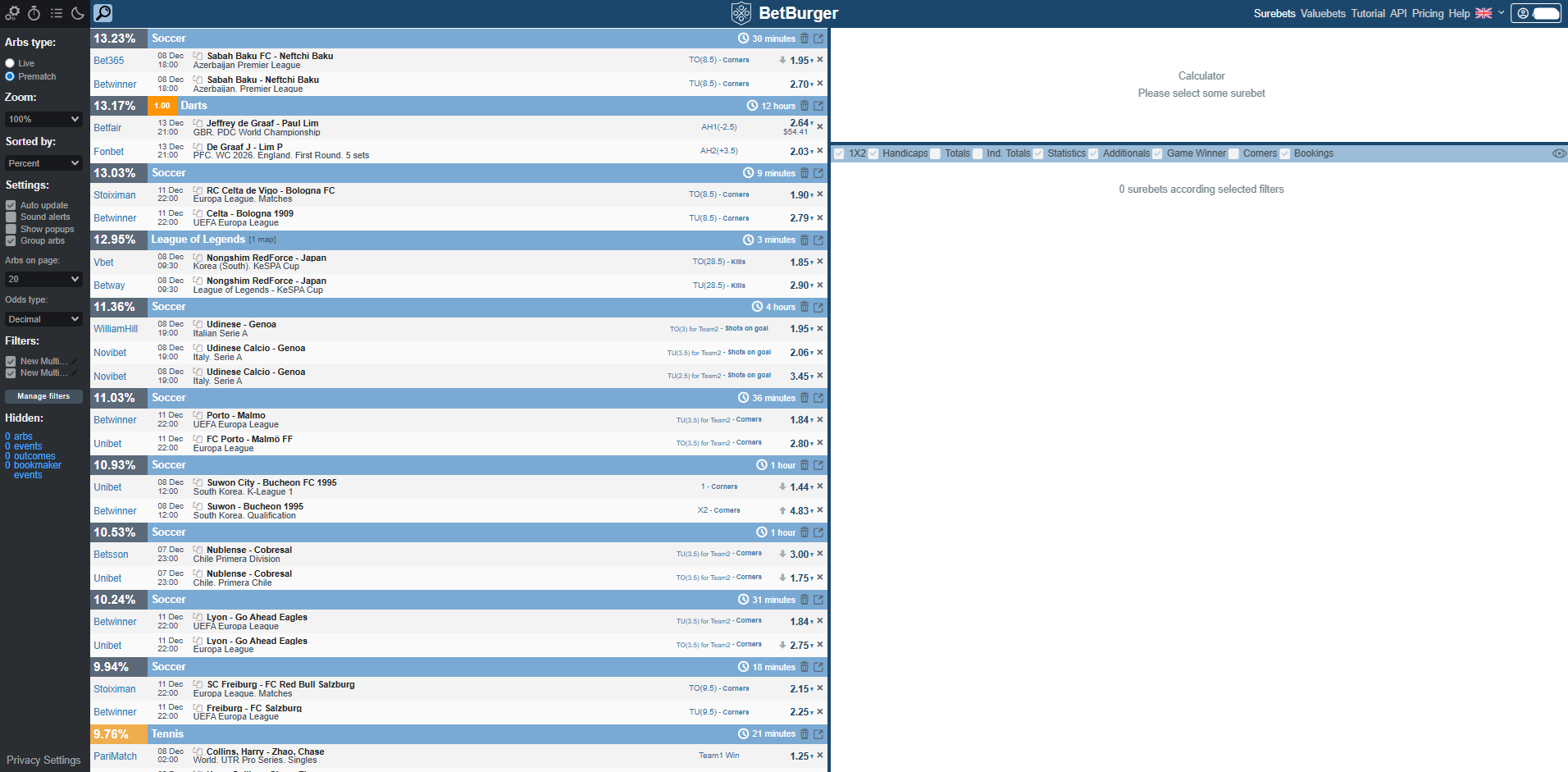
Developing such an algorithm independently is extremely difficult: it requires stable odds parsing, powerful server infrastructure, filters by sports and markets, mathematical module for probability recalculation and risk analysis block. Therefore, in practice, most players use specialized software in which these processes are already built in.
One of the best solutions in this category is considered to be the BetBurger service. It implements its own comprehensive algorithm for finding and calculating valuebets and surebets, which works around the clock, processes lines of hundreds of bookmakers and automatically identifies profitable situations. The user receives ready positions — he doesn't need to manually scan lines or compare odds between different bookmakers. This makes BetBurger objectively more effective tool compared to any homemade solutions.
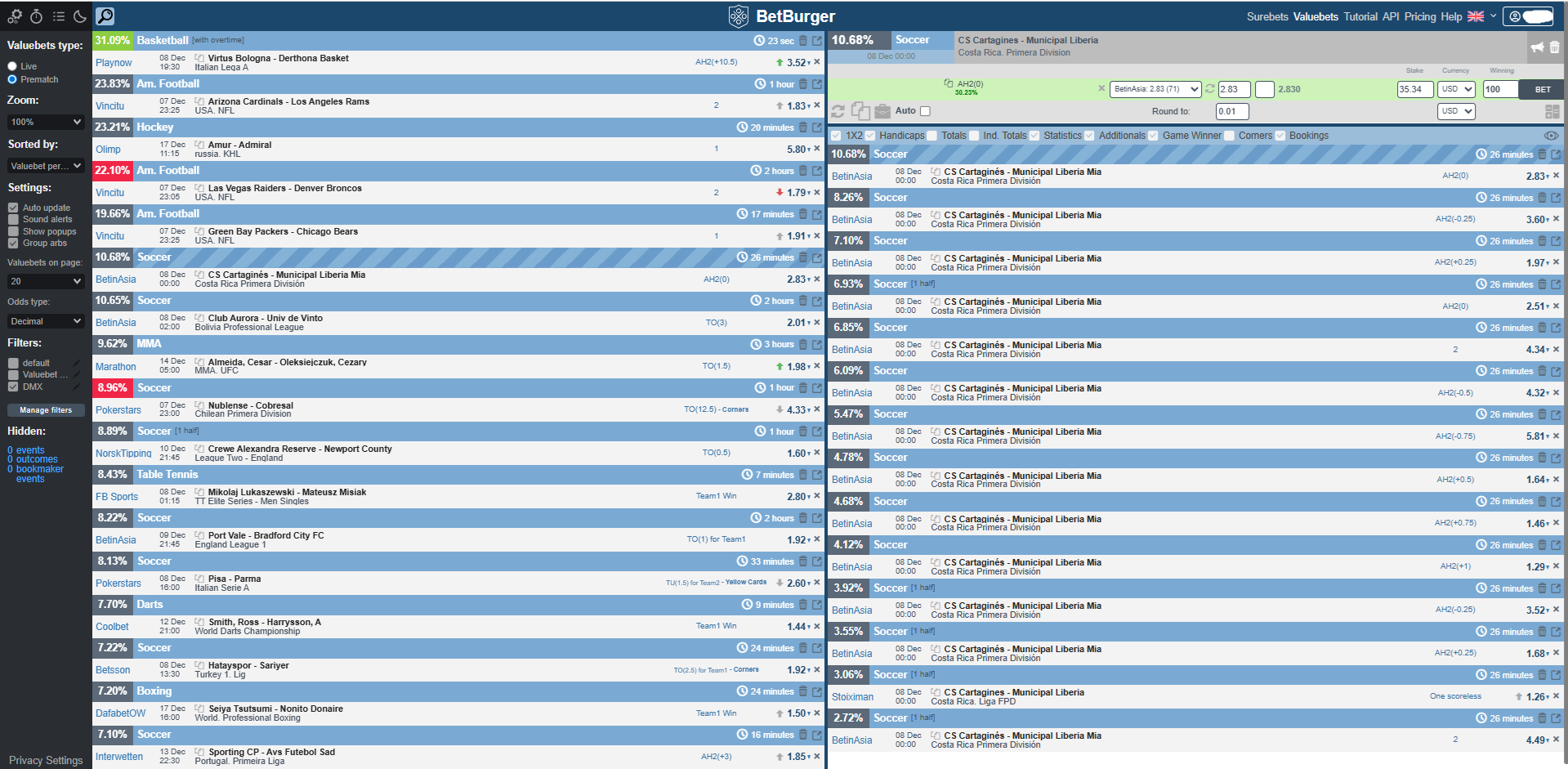
Betting algorithms can work on different principles: some use pure statistics, others — machine learning, and still others — mathematical expectation. Below are three brief examples that demonstrate different approaches to building predictions and finding favorable odds.
The Poisson model uses the average number of goals scored by teams to estimate probabilities of each possible score. Comparing these probabilities with the bookmaker's line allows finding undervalued totals or exact score markets.
The algorithm collects hundreds of matches with features: team form, xG, lineup, schedule. The ML model learns from this data and predicts the probability of win, draw or loss, helping identify bets with positive mathematical expectation.
The algorithm calculates EV = P x K − 1, where p is the estimated outcome probability, k is the bookmaker's odds. If EV > 0, the bet is considered value. The program goes through the line and collects positions where the odds underestimate the real probability.
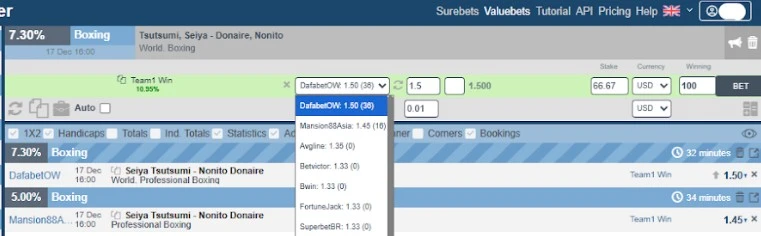
Creating your own working betting algorithm is significantly more difficult than it may seem. It's important not to try to "cover everything," but to choose a specific strategy and gradually develop it.
The approximate path may look like this:
Today there are many ready-made tools for different strategies and algorithm types: from simple statistical calculators to advanced surebet and value bet scanners. They relieve the player of the routine of collecting odds, recalculating probabilities and filtering events.
The BetBurger service can be highlighted separately. This is a specialized tool for finding surebets and valuebets, which implements its own algorithms for line scanning, margin accounting and mathematical expectation recalculation. The service interface maximally simplifies work: you see already filtered positions, can set limits by odds, leagues, bookmakers and bet size. With proper bankroll management, BetBurger helps systematically select positive situations and strive for stable profitability, however it's important to understand that any profitability in betting cannot be fully guaranteed.
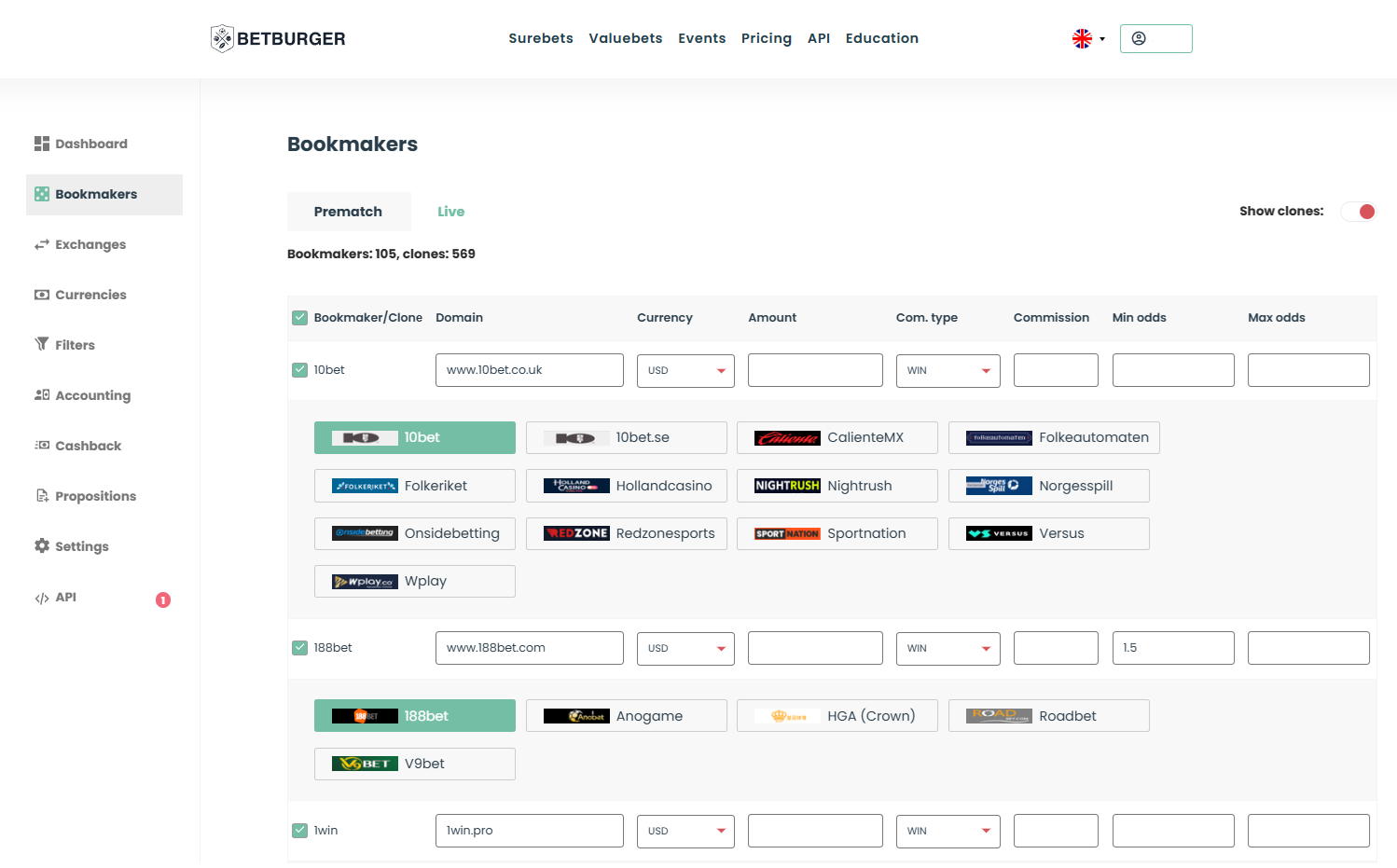
No matter how complex the algorithm, sports betting always remains a risky activity. Before implementing any strategy, it's important to consider a number of factors:
Sports betting algorithms can provide serious advantage over "random play," especially when used in conjunction with professional services like BetBurger. But it's important to remember the risks, test any ideas on a small bankroll and treat betting as a high-risk activity, not as a guaranteed source of income.
Below we decided to provide a list of popular algorithms and give their brief explanation.
 0
0
 0
0